Is the Housing Market Headed for Another 2008 Crash? Here's What the Numbers Actually Say
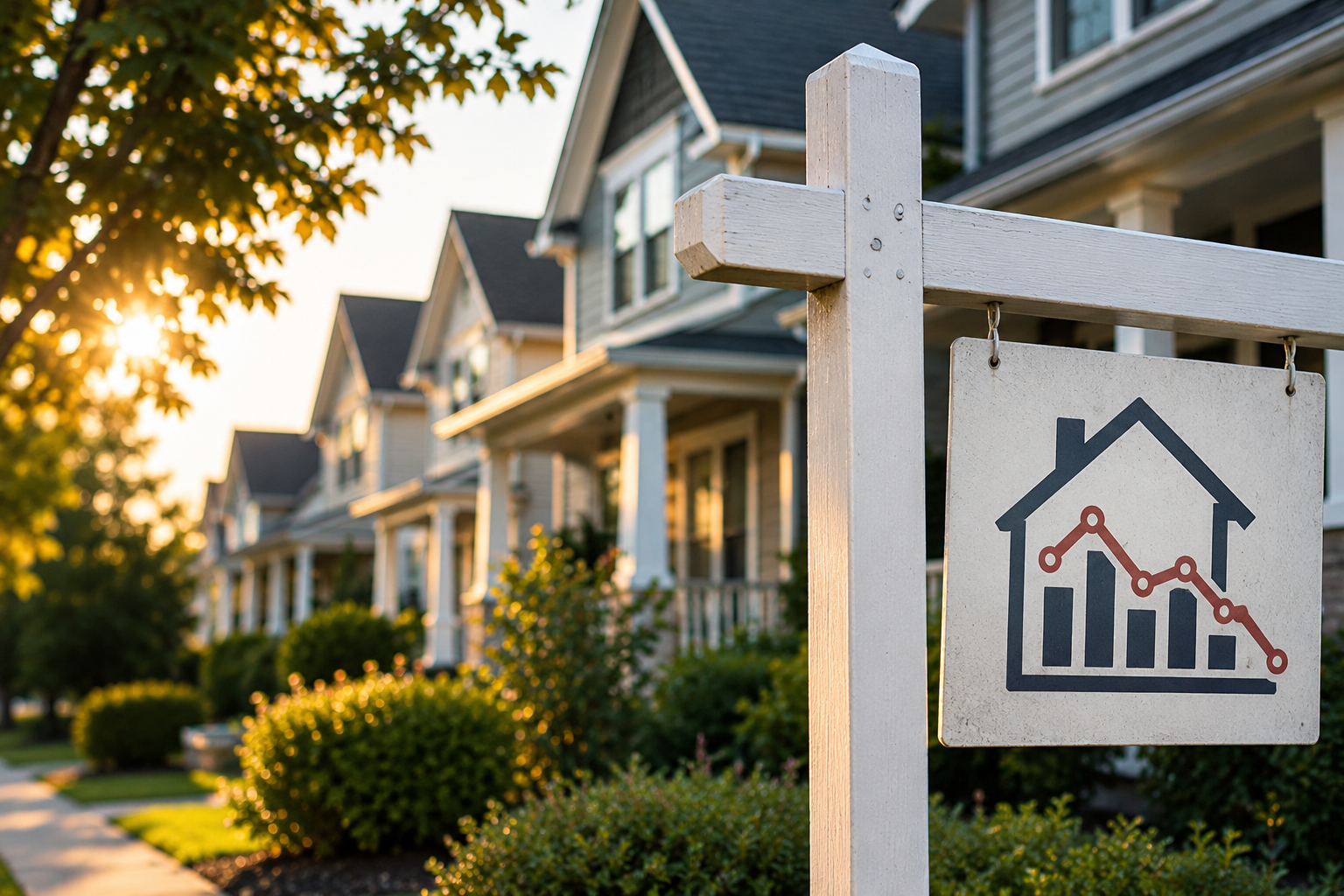
If you've spent any time scrolling through social media lately, you've probably seen the predictions. The housing market is about to collapse. Home prices are going to plummet. We're heading straight for another 2008. It's an attention-grabbing headline, especially for anyone who remembers what happened during the Great Recession. But before assuming history is about to repeat itself, it's worth looking at what's actually happening in today's housing market.
There's no question that the market is changing. Higher mortgage rates have made homes less affordable, buyers are becoming more selective, and sellers in some markets are having to reduce their asking prices. However, a slowing housing market and a housing crash are two very different things.
And when we compare today's numbers with what led to the 2008 financial crisis, some important differences emerge.
What Actually Caused the 2008 Housing Crash?
To understand why today's market looks different, we need to remember what happened leading up to 2008.
During the early 2000s, mortgage lending standards were significantly looser than they are today. Risky loans were widely available, including mortgages issued to borrowers who couldn't realistically afford their payments over the long term. Some buyers purchased homes with little documentation of their income, while others relied on adjustable-rate mortgages that became increasingly expensive when their payments reset.
As home prices climbed, many homeowners borrowed against their growing equity, assuming property values would continue rising indefinitely. When prices began falling and borrowers started defaulting, the problems spread quickly. Foreclosures increased, more homes flooded the market, and declining property values left millions of homeowners owing more than their homes were worth.
The result was a housing crisis that affected not just homeowners but the entire financial system.
Why Today's Housing Market Is Different
One of the biggest differences between 2008 and today is the financial position of homeowners.
Mortgage lending standards have tightened considerably since the financial crisis. Buyers generally face more extensive income verification, credit reviews, and underwriting requirements. While no lending system is perfect, the risky mortgage products that contributed to the previous crash are far less prevalent today.
Homeowners also have substantially more equity in their properties. Years of home price appreciation have given many households a financial cushion, even as affordability has become increasingly difficult for new buyers.
According to the Federal Reserve's November 2026 Financial Stability Report, mortgage credit risk remains relatively low, conventional mortgage delinquency rates are near historical lows, and the percentage of homeowners with negative equity remains very small.
That doesn't mean every homeowner is financially comfortable. Delinquencies have been rising in certain mortgage categories, and higher living costs are putting pressure on household budgets. But the widespread mortgage distress that helped fuel the 2008 collapse simply isn't showing up at the same scale today.
What About Rising Foreclosures?
Foreclosure activity is one of the statistics frequently used to support predictions of another housing crash.
And yes, there have been increases in foreclosure activity. But context matters. According to the Federal Housing Finance Agency, the rate of mortgages at least 60 days delinquent among Fannie Mae and Freddie Mac loans was approximately 0.84% in August 2026. During the aftermath of the financial crisis, that rate peaked at approximately 5.8% in 2009.
That's a substantial difference.
Recent mortgage data also shows that foreclosure activity has been increasing from relatively low levels. It's a trend worth monitoring, particularly as homeowners continue dealing with higher costs and economic uncertainty. However, an increase from historically low levels doesn't automatically mean we're approaching another financial crisis.
The more important question is whether financial distress is becoming widespread enough to force large numbers of homeowners to sell simultaneously. So far, the evidence doesn't point to the kind of nationwide foreclosure wave we experienced during the Great Recession.
Home Prices Are Falling in Some Markets. Isn't That a Warning Sign?
This is where the conversation gets more interesting. Home prices have softened in certain parts of the country, and price reductions have become increasingly common. Homes are also spending more time on the market as buyers take a closer look at affordability and negotiate more carefully.
But a price reduction doesn't necessarily mean a home's value is collapsing.
Consider a homeowner who lists a property for $550,000 when comparable homes are selling closer to $525,000. If that seller eventually reduces the asking price to $525,000, the listing technically experienced a $25,000 price reduction. That doesn't mean the market lost $25,000 in value overnight. It may simply mean the home was overpriced to begin with.
This distinction is especially important in a market where some sellers are still adjusting their expectations after several years of unusually strong price growth. Nationally, the housing market has slowed considerably. Existing-home sales fell in October 2026, while inventory increased and homes took longer to sell. These conditions are creating more negotiating opportunities for buyers, but they don't necessarily signal a nationwide collapse in property values.
A Housing Market Correction Isn't the Same as a Crash
Real estate markets move through cycles, and periods of rapid appreciation aren't sustainable forever.
A market correction can involve slower price growth, modest declines in certain areas, longer listing periods, and more negotiations between buyers and sellers. In many cases, these adjustments help bring the market closer to a balance between supply and demand.
A housing crash, on the other hand, typically involves much more severe and widespread declines, often accompanied by significant financial distress, forced selling, and major disruptions to lending. What we're seeing today is a housing market struggling with affordability and adjusting to higher borrowing costs. Some regions are experiencing greater price pressure than others, which is why broad national headlines don't always tell the whole story.
Real estate is local, and the conditions affecting a home in Frederick, Maryland, may look very different from those affecting a property in Florida, Texas, or another part of the country.
What Does This Mean for Buyers and Sellers?
For buyers, a slower housing market may offer opportunities that were difficult to find just a few years ago.
More inventory, longer listing periods, and increased price reductions can create room to negotiate on purchase prices, closing costs, and other terms. That doesn't mean every home is a bargain, but buyers may have more flexibility than they did during the highly competitive market of recent years.
Waiting for a major housing crash, however, comes with its own risks. There's no guarantee that prices will fall significantly in the area where you want to buy, and changes in mortgage rates could bring additional buyers back into the market.
For sellers, today's conditions reinforce the importance of realistic pricing. Buyers are paying attention to value, and homes that enter the market significantly overpriced can struggle to generate interest. Properties that are priced appropriately, presented well, and marketed effectively can still attract serious buyers, even in a slower market.
The strategies that worked when homes were receiving multiple offers almost immediately may not work as well today.
So, Are We Heading for Another 2008?
Nobody can predict the housing market with absolute certainty, and it would be a mistake to suggest that home prices can never experience significant declines. Economic conditions can change, unemployment can rise, and individual housing markets can face challenges that don't necessarily affect the entire country. But based on the available evidence, today's housing market doesn't have the same underlying weaknesses that contributed to the 2008 financial crisis. Mortgage lending is generally more conservative, homeowners have more equity, and serious mortgage delinquencies remain far below the levels experienced during the Great Recession.
That doesn't mean the market is perfect, and it certainly doesn't mean every home is worth what its owner hopes to sell it for. What it means is that we need to distinguish between a market that's correcting and one that's collapsing.
At Krop Team, we believe real estate decisions should be based on actual market conditions, not sensational headlines. Whether you're considering buying, selling, or simply trying to understand what your home is worth in today's market, having accurate local information matters.
If you're wondering how the changing housing market is affecting property values in Frederick, Maryland, or the surrounding areas, our team is here to help you understand the numbers and make an informed decision.